
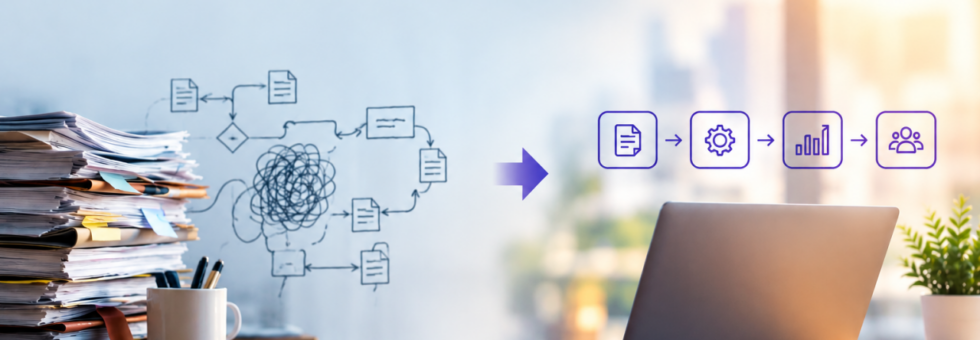
Something I’ve learned after many years working with systems and business processes is that an ERP implementation shouldn’t start with the software. It should start with understanding how the organization works.
Often, when a company decides to implement an ERP, the first thing it does is look at features:
- This system has manufacturing.
- It has CRM.
- It handles inventory.
- It has projects, purchasing, sales, invoicing…
And then the systems get compared.
But there are some questions that should be asked before going for the software:
- Do we really understand how our processes work today?
- How is a sale generated?
- How is an order processed?
- How do we purchase?
- How is inventory controlled?
- Where do errors show up?
- What information gets entered more than once?
- Which tasks still depend on a spreadsheet?
- Which processes depend on one specific person?
- And which ones do we keep doing simply because “that’s how it’s always been done”?
These questions may seem simple, but their answers are often the real starting point of an implementation.
The ERP should come afterward, once we understand the processes. Only at that point can we start analyzing what the system should do.
This is where another important question comes up:
Do we really need to develop something for every need we have?
Not necessarily. Sometimes we discover that a process can be simplified. Other times, that it can be eliminated. In some cases, the ERP already has the functionality we need and we’re simply not using it properly. And when a specific need truly exists, only then does it make sense to evaluate a configuration, a customization, or a development.
This changes the way we think about an implementation quite a bit. It’s no longer just about asking “Which ERP has the most features?”, but rather “What does our organization really need, and what is the best way to solve it?” And only then does technology come into play.
A good ERP should support the organization, not force it to work in a particular way. This is especially important because not every company operates the same way.
A manufacturing company doesn’t have the same processes as a small artisan producer, a service company doesn’t work the same way as an educational institution, and a growing organization probably won’t have the same needs two years from now.
For this reason, an ERP’s flexibility and ability to evolve are just as important as its features, and this is one of the reasons I believe open source solutions like Dolibarr have tremendous potential for many different types of organizations.
But the idea goes well beyond any particular software: technology should support the process, not define it, because digitizing a poorly designed process doesn’t turn it into a good one.
If you’re evaluating an ERP implementation, if you feel that some of your company’s processes cause more headaches than they should, or if you simply want to better understand what could be improved before thinking about a tool, let’s talk.
It doesn’t have to be about an ERP. We can start by talking about your processes, your problems, and the pain points your organization has today. Sometimes this conversation is the best first step to figure out what technology you really need.


